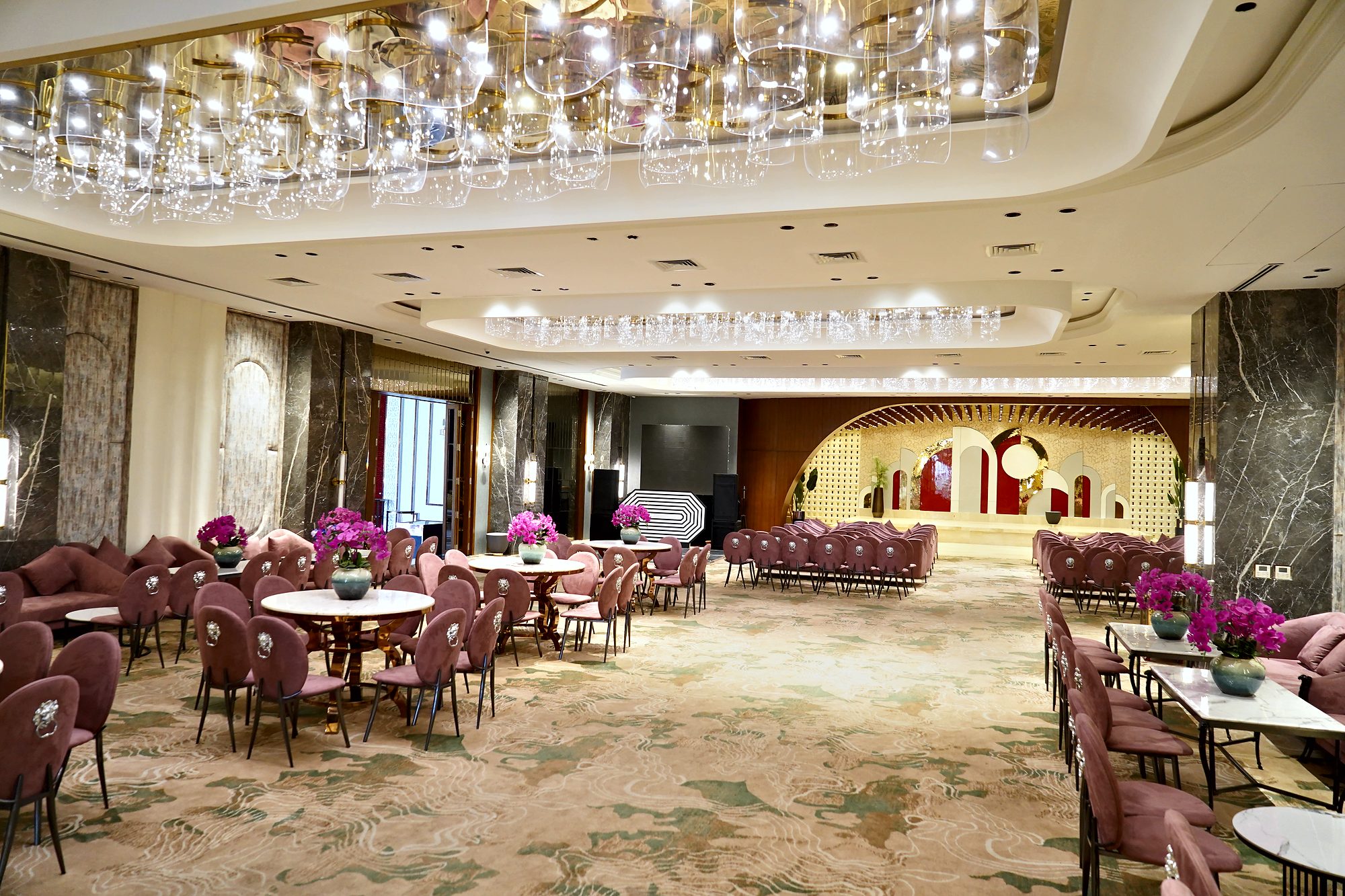
Opus
The largest of the three halls, and the one that takes a room full of people without ever feeling full.
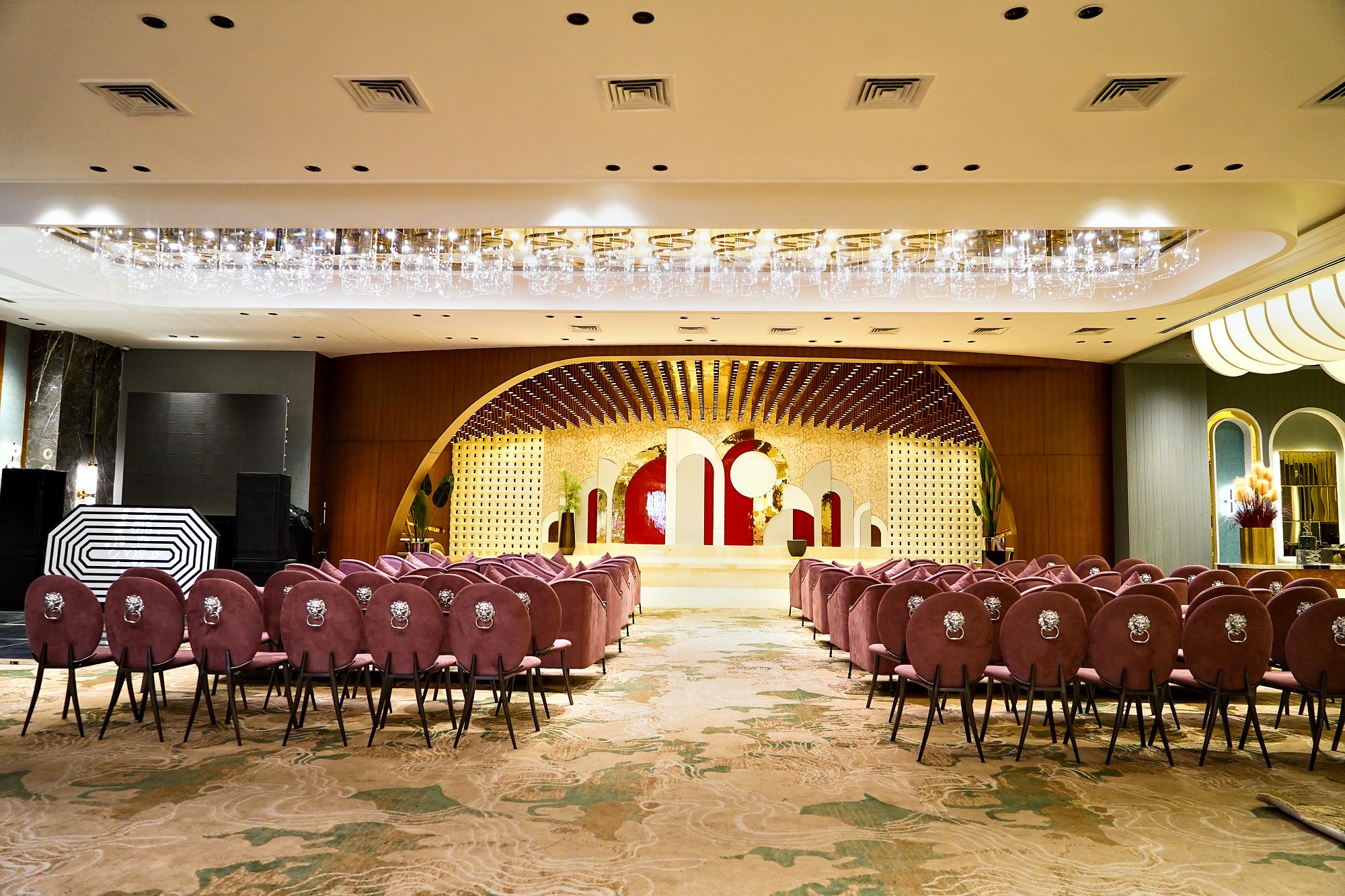
Rows, or Rounds
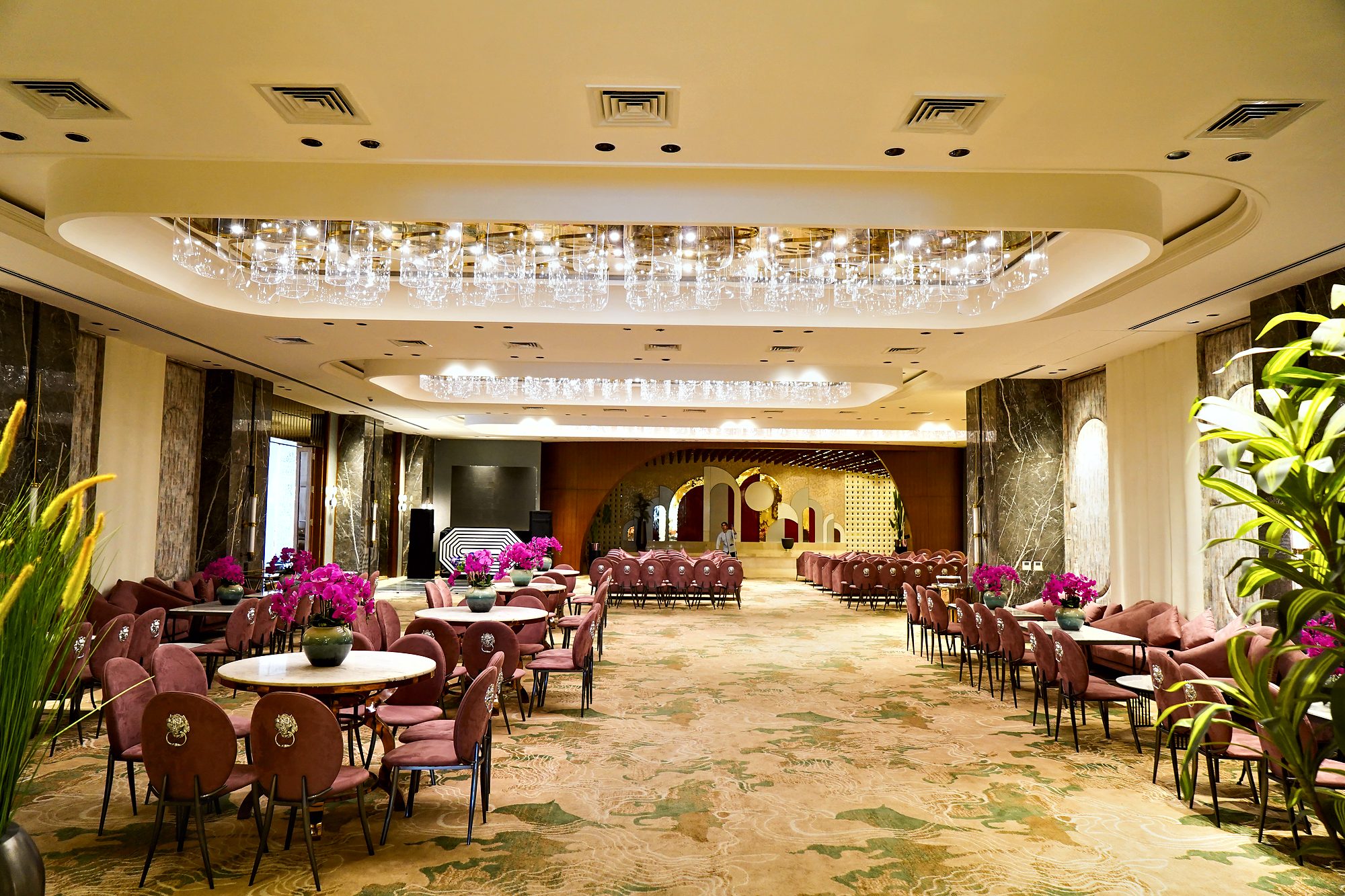
Opus is laid out to the evening rather than to a fixed plan. Chairs in rows turn it to the stage for a ceremony, an address or a performance; clear them to round tables and the same floor becomes a dinner. The change is made between sittings, so a day that opens with a conference can close with a banquet in the room it started in.
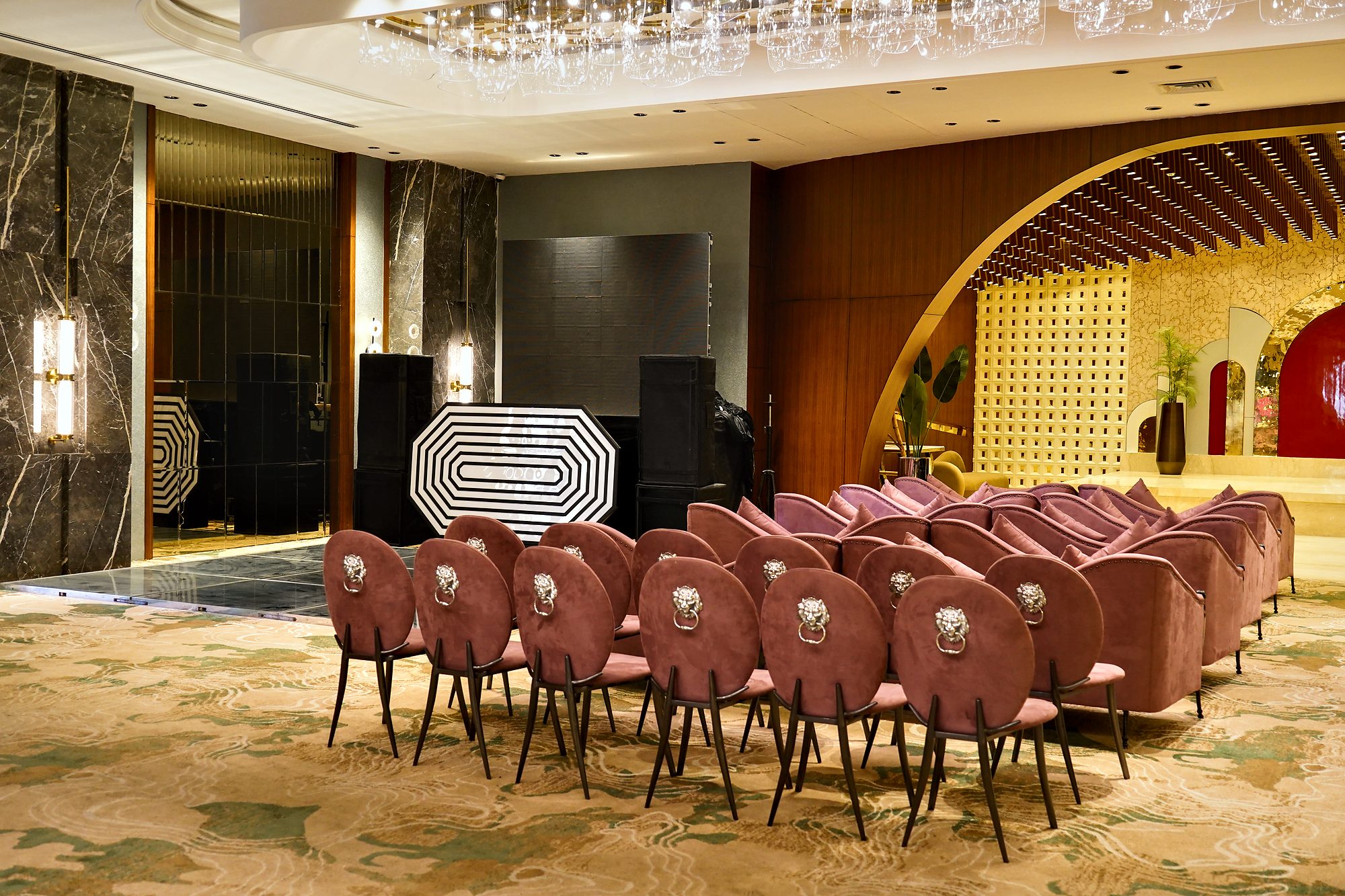
A Stage Built In, Not Brought In
One end of the hall is a fixed stage under a gilded arch, lit and backed in its own right, so nothing has to be trucked in and assembled across the floor on the morning. Speakers and screens sit where the room already points. It is the difference between a hall you dress and a hall that is already dressed.
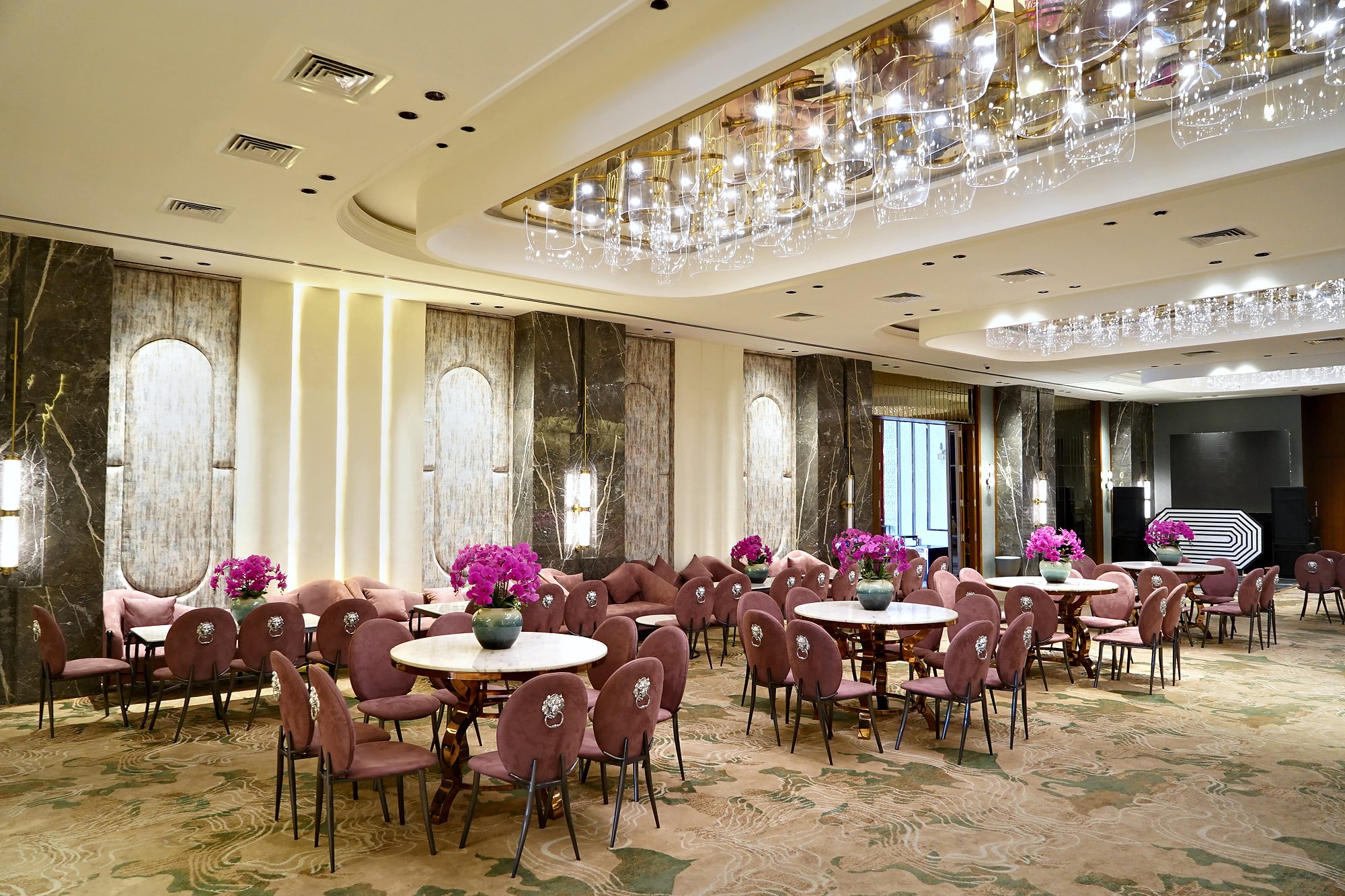
Chandeliers, Marble, and Room to Move
Runs of crystal hang the length of the ceiling, the walls carry arched niches in figured marble, and the carpet is patterned deep enough to take a full floor without looking crowded. There is width between the tables and height above them — the two things a large room usually gives up first.
Dressed Before You Arrive
Linen down, glassware set, planting carried in and the lighting brought to the level it will hold for the evening — the room is finished before the first guest reaches the door, not while they are watching. What arrives after that is the party.